
This post is the last post in a series on combat design.
There has been many attempts to classify storytelling. Georges Polti suggested The Thirty-Six Dramatic Situations in 1895. Vladimir Propp used a selection of 31 functions to illustrate similar things in the 1920s. There’s also the widely misused monomyth of Joseph Campbell, originally published in his book The Hero With a Thousand Faces in 1949. Stepping forward into our present day, Dan Harmon’s story circle and Christopher Booker’s Seven Basic Plots pop up.
Much of this work tries to take the nebulous concept of story and make it make sense. Sometimes through lenses such as folklore or mythology; today as attempts to make tools for screenwriters.
Screenwriting is the storytelling craft that seeps over into game development most often. But where gunplay and melee are technical challenges to solve, the design space for drama is something else. Without stakes, there is no drama. Without characters, goals, motivations, and risks, there is no drama. Some would say without conflict, there is no drama, and if we are not competing against other players, drama must come from somewhere else.
Let’s dive straight into the killing! We know we need to do violence in this combat game of ours, but we don’t yet know the details. The violence is also not what’s important for the drama to work.
Instead, there are five areas you can start with if you want to figure this out:
- Where I am and what I’m doing.
- Who I am, who I will be killing, who I care about, and why.
- What happens if I don’t kill who I need to kill.
- Which interesting choices I can make.
- I need to know that I won’t break the game.
Background
Where I am and what I’m doing.
When someone draws their gun or sword in a movie it’s often the culmination of a longer storyline. It doesn’t have to be an on-screen culmination, however. It can just as easily be Inigo Montoya telling someone to prepare to die and detailing why in the same breath.

The crux is that this doesn’t work in video games, and the reason is simple: a game cannot control its audience’s intentions or how they feel. Cinematic storytelling works on empathy. This has been discussed before. To afford a player the same level of connection to their character, the only trick that exists is to try to make the player and their avatar occupy the same head space.
The player needs to know who are involved, what the stakes are, and what can be done about it, and the avatar needs to be someone who shares the goals of the player. This is one reason why obeying is such a common activity: a soldier following orders is strongly connected to a player following instructions. The fantasy and the activity become one and the same. Go here, destroy this, kill those sentries.
In a game, it’s not enough to have your character tell the opponent that they should prepare to die because they killed your father. You, the player, will have no idea what the character is talking about if they do.
To mitigate this, many games use one of two effective shortcuts: stereotypes and/or explicit connection.
Stereotypical Evil
Alien invaders. Bugs. Nazis. The living dead. Foreigners. It’s always easier to make someone kill those who look different or speak a different language. Though the symbolism can be quite problematic, games rarely engage with symbolism and instead use stereotypical enemies for the sake of having something to kill.

Mandatory Connection
The more ham-fisted way is to copy the form that film uses and simply tell the player what they should care about. Those polygons over there were your family, now proceed to gun down bad guys for 15 hours.
Or, even more lazily, you need to find a person who is gone. Now go off and find them and kill everyone who stands in your way. There’s no way for you to know how they look like, where they are, or anything else: you need to trust that the game tells you when you did right or wrong.
What makes the empathetic connection work in film is the cinematic authorship and the way film directs the audience through this empathy. With players of games, they may be skipping all cutscenes, taking a phone call during the exposition, or even just fiddle around with their inventory items while someone is talking. Those are the activities you need to capture.

Cast
Who I am, who I am killing, who I care about, and why.
Making believable characters is not always the goal. Some games, like puzzle games and sports games, may not have much story context at all that requires such things. But my personal passion is immersive and highly systemic games with a strong core fantasy. Such games benefit from characters.
- Protagonists are the main characters: usually who the player is portraying.
- Antagonists are the enemies of the main characters.
- Support is everyone else.

Characters
When you sketch out your cast and why they hate each other, you shouldn’t get too stuck thinking of individuals. A character will often be an individual, of course, but characters can also be horses, space ships, machines, weather phenomena, and many more.
A faction like “The Guards” will provide a good umbrella for presentations. If you present guards as corrupt and somewhat dull, this provides good information for the player whenever they encounter a guard. It also means that an individual guard that breaks from the stereotype becomes more interesting. Think of the Fable warden that reads poetry, for example; a character that plays off a warden trope and then has some fun with it.
Companions in games range from animals to disembodied voices talking through an earpiece. Something that becomes extra relevant since it’s harder to give the player’s character a voice when there’s no way to know what the player is thinking. Then it’s easier to express world information through companions. But movies do the same with sidekicks and other characters who can provide infodumps.

A Good Game Protagonist
If a game is primarily an action game where the player will shoot and stab things, it’s hard to make a pacifist main character. In the first Tomb Raider reboot, Lara Croft is seen lamenting her first kill in a cutscene. The player playing Lara then proceeds to kill many more, presumably without batting an eyelid.
This dissonance can only really be avoided by putting the main character (the player’s avatar) and the player as close to the same mental space as possible. Or in the words of then-Telltale game designer, Harrison Pink: “Spend the time to let your player build the same primary motivations as the character. Let them experience the events that kick the story off together.”
Few games do this better than Thief: The Dark Project. Players are wont to steal and loot things in all games, and Garrett is the master thief. A role that not only promotes but reinforces the player’s emotional space.
“The goal is to allow the player and their avatar to occupy the same emotional space,” said Pink. Making sure that the role you play and the activities you engage in carry the same motivation.
Intention and Obstacle
Screenwriter Aaron Sorkin refers to intention and obstacle as the drivers for a good script. “Somebody wants something. Something standing in their way of getting it,” he said in his Master Class on screenwriting. “They really want it bad, and whatever’s standing in their way has got to be formidable.”
If you were to make a roadtrip story that starts with a group of friends going to Las Vegas, and then continues when they get there, it wouldn’t be much of a roadtrip story. But going to Vegas is a clear intention.
To become a story worth telling—or, for a game, worth playing—something has to obstruct the trip, stir up a conflict in the group of friends that splits them up, or otherwise generate an obstacle. The more you can tie this to the individual characters, the better.

Character Development
One way to look at character development is from the perspective of flaws. Many stereotypes exist here. Alcoholism, avarice, jealousy, laziness; there’s a slew of flaws that a character may display. What you can take character development to mean is a character’s struggle to try to overcome their flaws.
If the character succumbs, it indulges in its flaw and sinks deeper. If it instead overcomes its flaw, it gets to show to the world how this improves everything, or how it leads to another flaw. Some characters have flaws as defining traits instead and the portrayal focuses on how they handle the problems it leads to. They will never succumb or overcome—there’s no redemption for them—but they will still struggle.
What’s important with flaws and character development is that they are made to matter. In games, you will sometimes fight against literal demons made to manifest flaws through the game’s other systems. In Condemned 2: Bloodshot, the main character Ethan struggles with alcoholism. You take a deep swig of hard liquor to steady your aim for a while. Throughout, the Alcohol Demon harasses you, until eventually, once the Alcohol Demon is defeated, Ethan’s aim when using firearms will no longer need to be steadied by consuming alcohol.
These kinds of explorations of how to make interactions matter in game development are still not fully mature. We have a lot left to explore in this space as game developers. How to allow players to bring their own mental models to games and experience personalised stories that don’t have to turn mental issues into bossfights.

Dissonance
When I played Red Dead Redemption 2, I wanted to shoot Micah in the back during the rescue mission or just leave him in his cell to rot. I spontaneously disliked the guy, without knowing how things would develop. It’s one of the worst cases of dissonance I’ve personally had between the character I’m playing’s reaction to another character and my personal reaction.
This type of dissonance, between the intentions of the character you are playing and your intentions as a player are quite common in games and come from the idea that you are telling a story to players rather than letting them experience one. Micah’s betrayal seemed inevitable to me, to the point that I groaned when it eventually happened. I could’ve prevented it without anyone ever being the wiser, by simply shooting him in the back during the rescue and dumping his corpse outside a bear cave somewhere.
Because of RDR2’s deep systems, I even know how I’d do it. But I’m not allowed to. Micah has plot armor—he’s arbitrarily immune to the game’s systems because he has a role to play in the narrative script. An authorial infringement on my mental model playing Arthur.
My canonical Arthur certainly shot Micah in the back.

Stakes
What happens if I don’t kill who I need to kill.
Games rarely deal with stakes. The only thing that tends to be at stake is the player’s time. If the player character gets killed, it fails the game and triggers a checkpoint reload.
In some types of games, the lack of any real stakes has consequences on the game’s emotional space. In horror games, the suspense often comes from uncertainty and from the fear of dying. Once you do die, the illusion crumbles, because you can see that all you ever risked was to have to redo some arbitrary part of the game. Dying becomes a fail state and part of a retry cycle, same as in any other kind of game.
To approach this, let’s look at stakes.

Premise
“It used the backdrop of an epic, but didn’t try to tell an epic,” said ex-Looking Glass art director Nate Wells about the Thief series. “I think that’s still one of the greatest mistakes games make. They set down all the proper names then proceed to show you the conflict at a kingdom versus kingdom level. What you have to do is just set that in the back and tell the story of one character. Tell the low-level story.”
The premise is where and when we find our cast. Whether this is revolutionary France or Epic Fantasyland, it will tell the player something about what is important. In a desert, they will probably find water precious, and a group of parched survivors fighting over a wellspring has a very clear stake: without the water, they die.
This is also why this isnt’ just setting. It needs to tell the player why something is worth fighting for and in as clear a way as possible.
Scale
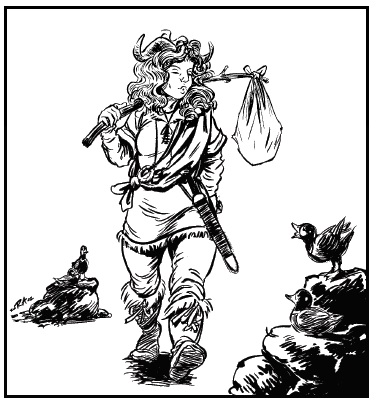
In the tabletop role-playing game Trollbabe, by Ron Edwards, stakes are defined by a concept called Scale and “applies to the extent of actions and effects in the fiction. Low Scale means only a few or little things are changed; high Scale means whole communities, even continents, are changed.”
Scale ranges from 1 to 7, where 1 represents “[a] person’s or a few persons’ immediate well-being” while 7 represents “a large area identifiable by similar cultural practices and physical resources, including many communities across diverse geography.”
This starting point is helpful, since Trollbabe also doesn’t allow Scale to be reduced. So if you increase the stakes by saying that an army is threatening the village, you cannot then decrease the Scale to make it about a stall merchant’s stolen bread loaf. This type of rule is helpful when working within any game design context.
Urgency
Many stories, whether written or recorded, will present a sense that if things are not resolved now, then there will be dire consequences. But translated into game contexts, any sense of urgency often falls flat. Particularly in open world games where months can pass between you receiving the quest and actually completing it, while dialogue and other in-game copy will still imply said urgency.
This doesn’t have to be the case however. In games as old as The Hobbit, urgency has played an important role. Not always stated out loud, but that game’s dynamics affected where some characters could be found. Just like Dead Rising puts everything on a schedule and if you miss an event because you’re not there, then it is still resolved as if it happened. If you want to get on the chopper, you need to actually be there!
Frankly, if you don’t do urgency in a systemic way, it’s better to not do it. The player will understand that it’s not real.

Choices and Consequences
Opportunities to make interesting choices.
The concept of choices and consequences (sometimes “C&C”) has often been a talking point among gamers and game developers. Particularly for role-playing games.
When it comes to combat, your choices will be informed by your understanding of the characters and premise. If you decide to poison the desert wellspring that was mentioned earlier, everyone would die. But if the game has already established poison as a tool, this makes it an interesting choice to be able to make.
In Bob Case’s (“MrBtongue”) excellent YouTube video on choices and consequences, four things are brought up as how you can make choices work. The first three are highly relevant. If you also want the fourth you will simply have to watch Bob’s video.
Manage the Scale
“As your number of choices increases arithmetically, the number of possible game states increases exponentially, and if you are not careful you may inflict an impossible workload on yourself.”
Since my obsession is systemic games, scale is less about the state-space complexity Bob Case is talking about and more about the development overhead of your systems. You will design the objects and rules and the states will be consequences of how everything interacts.
The key to managing scale is to be careful with how many rules you establish and how many tools you provide the player with.
Failure is a Consequence
“[I]f your goal is simulation, then an action that would logically lead to failure in the real world should also lead to failure in your game.”
Games rarely have interesting consequences for failure and combat is usually the worst. Like we covered before, dying means you’re dead and you have to replay. A future post will go into scenario and mission design, but at this level it’s interesting to remember that failure is real and that it should be allowed to happen.
At the very least, your game should provide feedback that acknowledges the failure and builds forward on top of it. It can be to add scars or to have characters comment on it, but it needs to be a concrete thing.

Make Me Paranoid
“Keep us guessing. Keep us worrying about the possible consequences of everything we do, regardless of whether the game accounts for them or not. It will make for a more immersive experience.”
Bob Case mentions how, in the original Fallout, if you speak about the vault where you came from there may be bandits who go there to raid it. He mentions how this has affected how he looks at choices in every game he’s played since. Such a powerful consequence for speaking carelessly.
But remember that you don’t need content for everything. For many games, as long as you provide enough consequences, the player will read more things into it. Imagination does a great job filling in the blanks.
State-Space Stability
Trusting that the game remains stable.
Many players are not used to pushing the boundaries. It’s also quite comfortable to know that, whatever happens, the game will reset back to its default state so you can try again. For as long as gaming has had right and wrong choices, there’s also been save scumming. From the sharing of ready-made save files to “abuse” of the Quick Save/Quick Load keys.
Much of this comes down to stability. If a game has many interconnected systems, it can easily get out of control, and players may get frustrated or miss expensively produced pieces of content. This is one reason that killing the player’s avatar and resetting the state is so powerful: you know (as a developer) that the game state is being reset and that everything is now safe.

Escalation and Deescalation
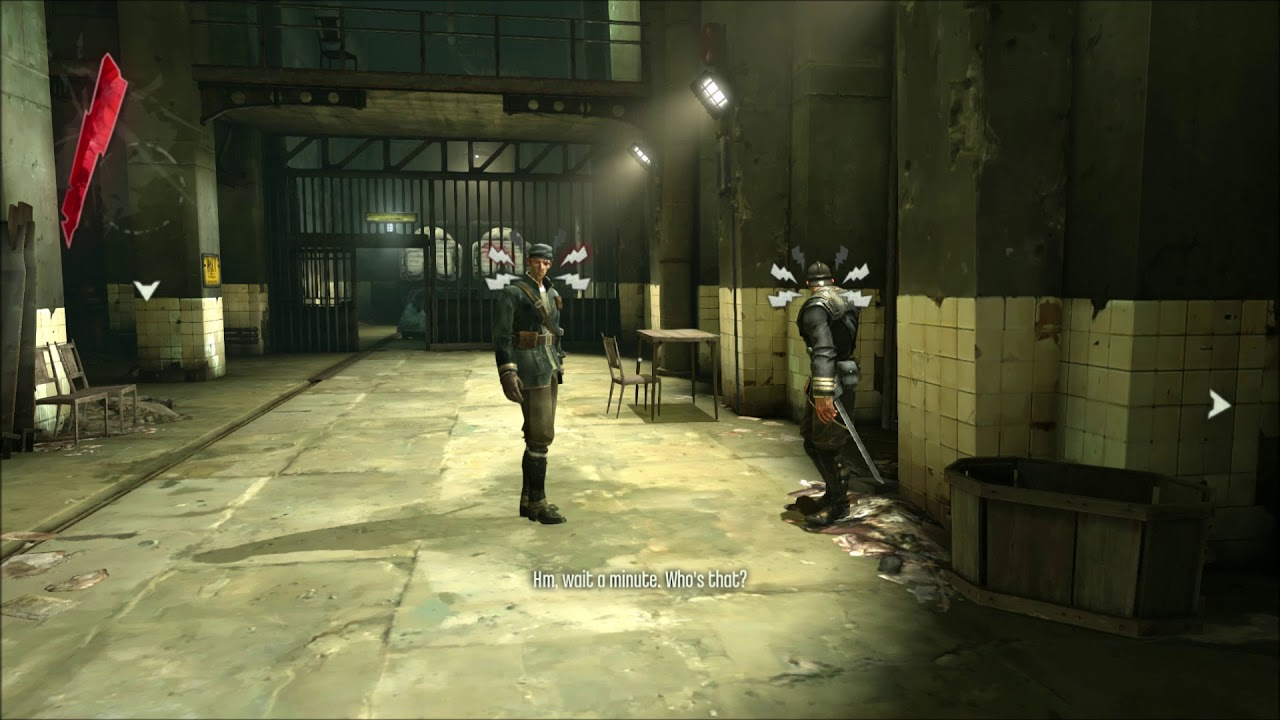
Many games with stealth have a mechanic where being spotted and unable to stop the spotters will put the whole game into an alarm state. Turning off the alarm or disappearing for a while will have the enemies return to their previous state. There’s no checkpoint reload, but it kind of behaves the same as one.
Players will sometimes comment on this and talk about how unrealistic it is, but as a mechanic, it allows players to try and try again without having to save scum.
Combat Philosophy
This was a hard series of posts to write and mainly because they treaded a bit too far from practical implementation and into the realms of theory. Personally, I think this makes them lower quality than the posts I have on my blog that are more specifically tied to systemic design, and I intend to return to the practical because of this.
It’s been a good exercise in thinking through what combat can mean, and to inform my own projects too (more on those some day), but there are more systemic subjects to cover and those will be coming back next.
Until then, if you agree or disagree with anything, please do so in comments or via annander@gmail.com.
 Playtank
2 thoughts on “Combat as Drama”